Relatives on the father's and the mother's side
Serbian tells you which side of the family a relative comes from. A stric and an ujak are both uncles in English, but one is your father's brother and the other your mother's.
| Serbian | In English |
|---|---|
| Stric | uncle (father's brother) |
| Strina | aunt (wife of father's brother) |
| Ujak | uncle (mother's brother) |
| Ujna | aunt (wife of mother's brother) |
| Tetka | aunt (father's or mother's sister) |
| Teča | uncle (aunt's husband) |
| Bratanac, bratanica | nephew, niece (brother's son, daughter) |
| Sestrić, sestričina | nephew, niece (sister's son, daughter) |
| Brat or sestra od strica, ujaka, tetke | first cousin (child of a stric, ujak or tetka) |
| Pradeda, prababa | great-grandfather, great-grandmother |
| Čukundeda, čukunbaba | great-great-grandfather, great-great-grandmother |
In-laws: the husband's family
This is what a wife calls her husband's relatives.
| Serbian | In English |
|---|---|
| Svekar | father-in-law (husband's father) |
| Svekrva | mother-in-law (husband's mother) |
| Dever | brother-in-law (husband's brother) |
| Zaova | sister-in-law (husband's sister) |
| Jetrva | sister-in-law (wife of the husband's brother) |
In-laws: the wife's family
This is what a husband calls his wife's relatives.
| Serbian | In English |
|---|---|
| Tast | father-in-law (wife's father) |
| Tašta | mother-in-law (wife's mother) |
| Šurak | brother-in-law (wife's brother) |
| Svastika | sister-in-law (wife's sister) |
| Pašenog | brother-in-law (husband of the wife's sister) |
Zet, snaha, prijatelj and step-family
| Serbian | In English |
|---|---|
| Zet | son-in-law; also a sister's husband |
| Snaha (snaja) | daughter-in-law; also a brother's wife |
| Prijatelj, prija | the father and mother of your child's spouse (no single English word) |
| Očuh, maćeha | stepfather, stepmother |
| Pastorak, pastorka | stepson, stepdaughter |
How KinTree works out the relationship
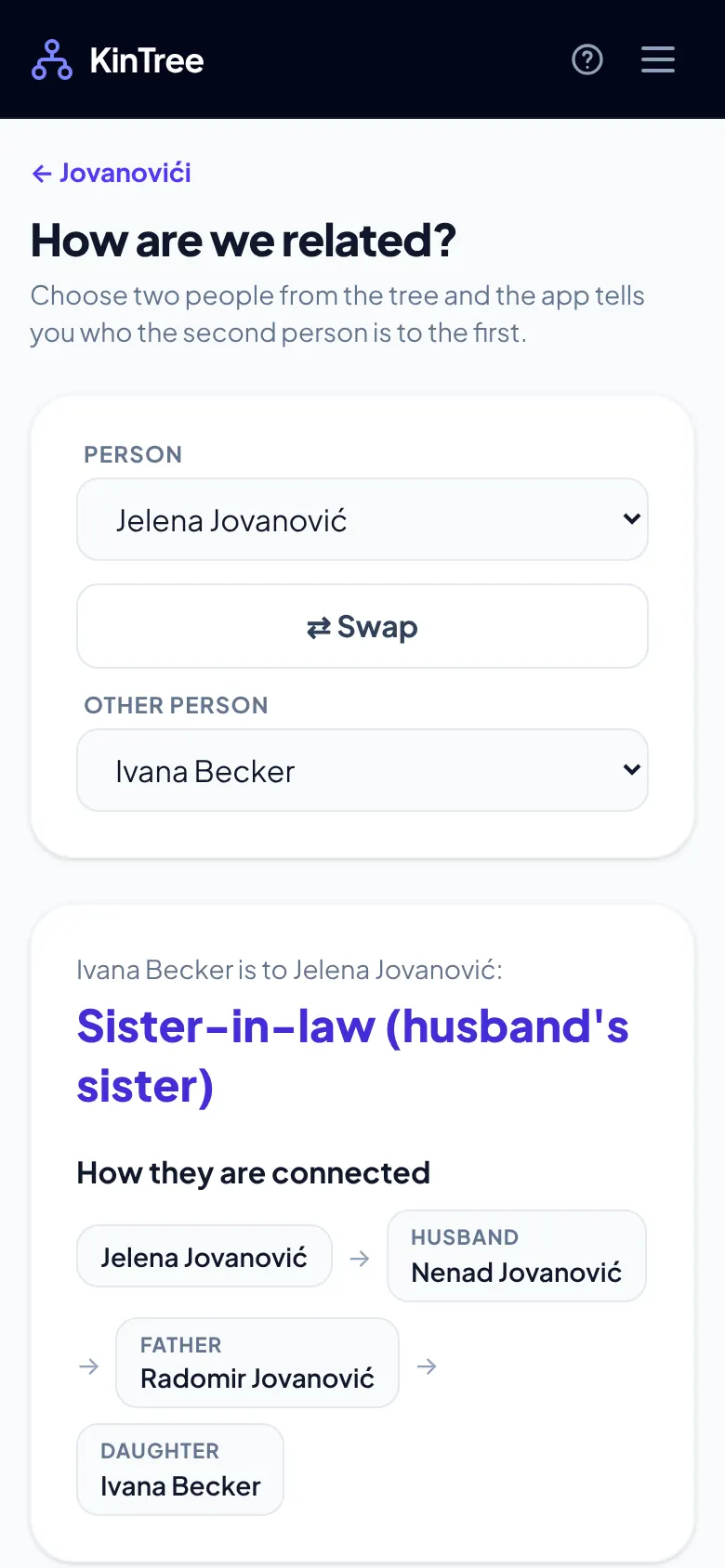
Pick two people in the tree and the answer appears at once, for example “Petar is to Ana: Brother-in-law (wife's brother)”. Below it is the path through the tree, person by person, so you can see why.
Blood relationship comes before relationship by marriage. More distant relatives get a degree of kinship: the number of births between the two people through their closest common ancestor, as in Serbian law.
In the English, German and French app the Serbian logic stays, with the explanation in brackets. Children growing up abroad, and a spouse who does not speak Serbian, finally know who is who at the slava.